
Supporting Community With Retrofit Navigators Across Nova Scotia
Grant award: $75,000
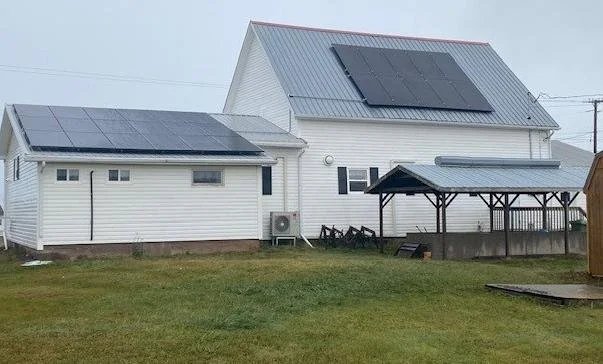
Community halls and non-profit spaces play a critical role across Nova Scotia. They are gathering places, service hubs, and, in many cases, essential supports during emergencies. Yet many of these buildings are aging, energy-hungry, and costly to operate, putting strain on the volunteer-led organizations that rely on them.
Navigate Energy’s Community Retrofit Champions project is focused on strengthening these spaces by reducing energy costs, improving building performance, and increasing their long-term usability. Navigate Energy acts as the central coordinator and driver of energy improvements by securing funding and coordinating contractors into a single, customer-focused journey.
This work builds on Navigate Energy’s earlier demonstration project in Pictou County, where dedicated outreach and support to community halls, paired with combining smaller halls together, made the work more attractive to contractors and funders. The demonstration project secured $1.3M in funds to eliminate over 30,000 litres of annual oil use and decrease heating and electricity costs by over $115,000 across the community. Some buildings that were previously used seasonally are now operating year-round, with lower energy costs and increased community use. As one local leader noted, the changes have been “nothing short of transformational,” with reduced financial strain, improved occupant comfort and greater capacity to host community programming.
At the core of the current project is a simple challenge: many community buildings are volunteer run, with limited time, capacity, or technical knowledge to pursue retrofits. “Most of the organizations we’re talking to don’t have the capacity to upgrade more than one system at a time” says Delaney Helmke, Retrofit Navigator at Navigate Energy. “Some don’t know where to start with projects, others run into friction points along the way. We take on the work that otherwise wouldn’t get done.”
Navigate’s approach is to remove the complexity of energy upgrades. The team coordinates assessments, identifies funding pathways, and manages project planning so volunteers can focus on providing essential programming for their communities. This support is especially important in rural and African Nova Scotian communities, where fewer resources and aging infrastructure can make upgrades more difficult to pursue.
Affordability is another key driver. For many community buildings, energy costs are among their largest annual expenses. By reducing or eliminating those costs through efficiency upgrades and clean energy solutions, the project helps free up funds for programming. “When you eliminate the biggest bill for a community hall, it allows them to reinvest those savings in what they actually want to offer,” says Liam Cook, founder of Navigate Energy.
Past successes have garnered strong interest for further support. The team has identified over 1,300 community buildings that would benefit from energy upgrades. Engagements with municipalities, non-profit networks, and provincial departments continue to expand the project’s reach, alongside partnerships with organizations such as the Salvation Army and the Nova Scotia SPCA, who are now exploring retrofit opportunities across their building portfolios.
Initial engagements are already leading to impacts. Information sessions and building walkthroughs have sparked curiosity, optimism, and a renewed sense of possibility. “People have a feeling of hope that something can change,” Delaney notes.
“There’s a real need for places where people can come together,” adds Andy Thompson, the Community Champion with the Plymouth Community and Recreation Association. “If we can make those buildings more comfortable and usable, it strengthens the whole community.”
The project has not been without challenges. Outreach can be inconsistent, particularly with seasonal buildings, and there is often initial skepticism. “Sometimes it sounds too good to be true,” Delaney explains. At the same time, shifts in the funding landscape, particularly reduced rebates and increased competition for grants, have made securing capital for upgrades more complex.
To address this, the team has adapted its approach to focus on early-stage supports, including assistance with assessments and retrofit roadmaps that help organizations become “funding-ready.” This phased model also allows Navigate to aggregate projects, identify multiple funding opportunities, and build toward larger, multi-partner capital solutions over time.
By combining technical expertise with a community-centered approach, Navigate Energy is helping to make retrofit pathways more accessible for organizations that might otherwise be left out, while strengthening the role of community spaces as hubs for connection, resilience, and local activity.