Making Affordable Housing More Affordable
Grant Award: $75,000
For many folks, the actual cost of housing doesn’t end with the monthly rent. Electricity, heating, transportation, and maintenance all add up. For Akoma Holdings, creating affordable housing means thinking about those costs, too.
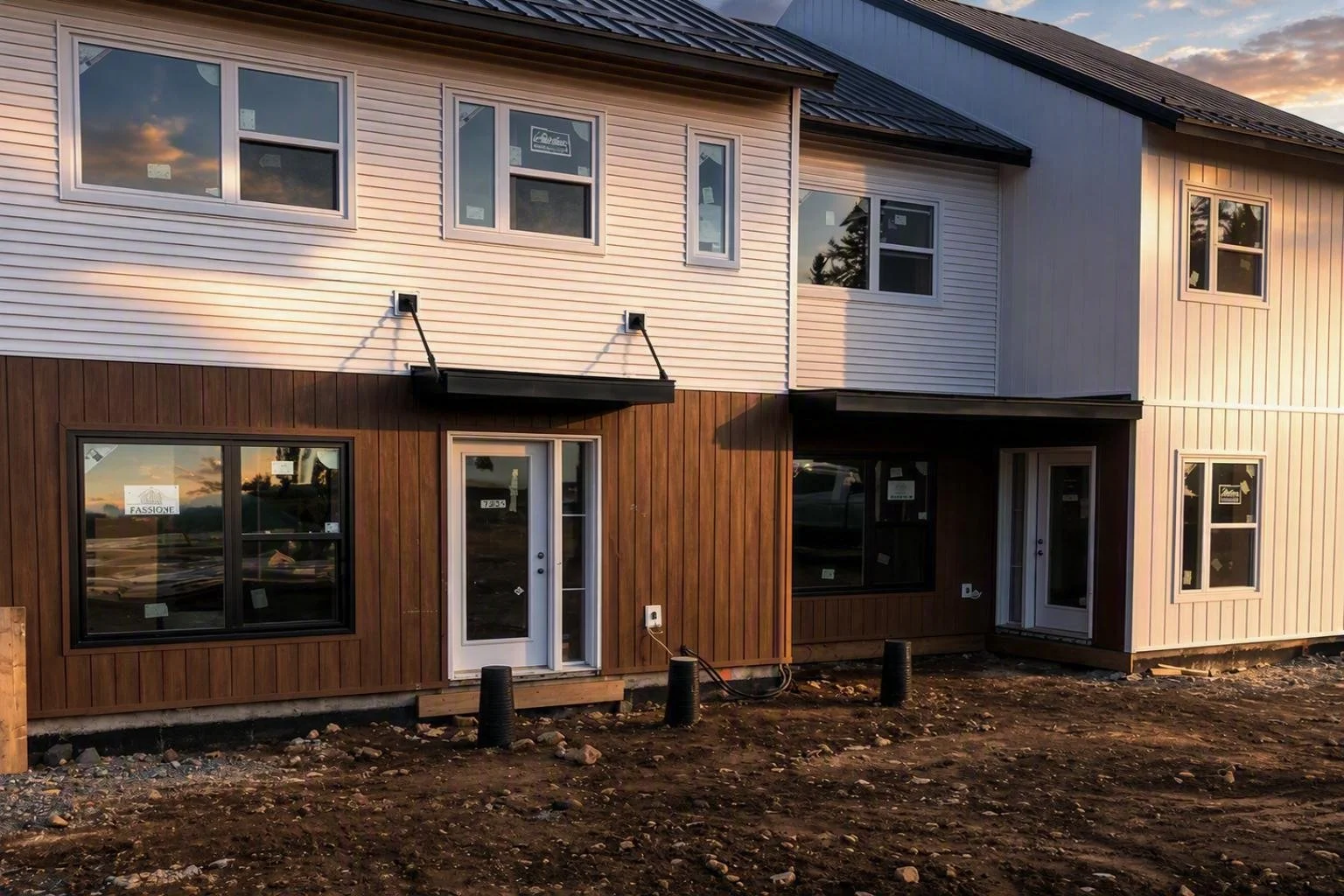
That thinking is at the heart of Akoma’s Solar Power and EV Charging for Affordable Housing project, which is bringing rooftop solar and EV charging infrastructure to eight new affordable rental townhomes in Lake Loon.
“We recognize that a home may have an affordable rent, but if it is expensive to heat, power, or maintain, it may not be truly affordable,” says Dr. Nutifafa Geh, Program Manager at Akoma Holdings.
The Akoma Lake Loon development builds on Akoma’s growing work in affordable housing. Its first residential project, Fairfax Homes, opened in 2023 behind the Akoma Family Centre. The semi-detached homes were developed through the Rapid Housing Initiative to provide affordable housing for African Nova Scotian families.
The need for more housing had already been identified through Akoma’s 2019 Housing Needs Assessment Study, which highlighted the need for homes for Black families. With the Akoma Lake Loon project, Akoma is focusing on larger African Nova Scotian families who are working but still face challenges finding housing they can afford.
“Addressing housing needs is one of the foundations of Akoma,” Geh says.
That means looking beyond the cost of building the homes themselves. Akoma considered how much residents will spend to heat and power their homes, along with maintenance and repair costs over time. Durable materials, insulation, efficient building systems, heating, and ventilation were all part of that equation.
“Our approach was to think beyond the initial cost of construction and consider the total cost of living in, operating, and maintaining the homes over time,” Geh explains.
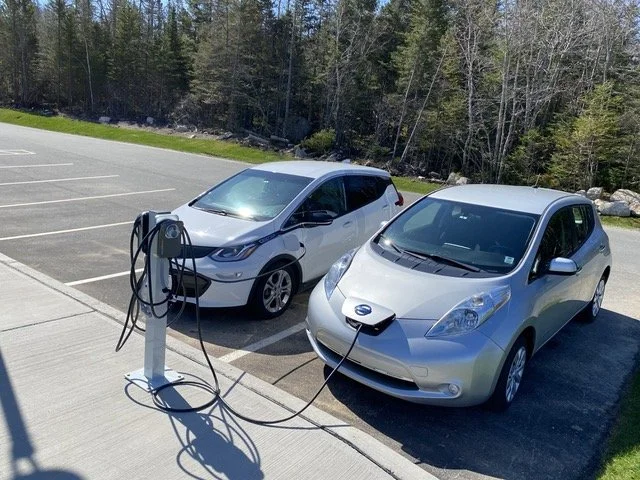
Sample of a completed EV charger installation.
The homes are already designed to be energy efficient, with heat pumps installed for heating and cooling. The project also builds on Akoma’s previous work with HCi3, which supported the installation of two electric vehicle charging stations at the Kinney Place building through a small
grant. HCi3’s $75,000 Accelerator Grant allows Akoma to take that work further by adding rooftop solar and EV charging at Lake Loon.
Solar power will offset some of the electricity residents draw from the grid, helping lower monthly bills and providing some protection against rising energy costs. Heat pumps can lower energy costs because they transfer heat very efficiently, using less energy than many conventional heating systems to deliver the same amount of warmth.
For residents who make the transition to an electric vehicle, having a charger at home can make that choice easier and less expensive.
“The home charging option provided to residents offers more convenience since they don’t have to make separate trips to public charging stations,” Geh says. “It could also be less expensive, especially when cars are charged during off-peak, lower-cost electricity periods.”
Home charging also gives residents the confidence of starting each day with a full battery, eliminating the need to spend time waiting at public charging stations.
Together, Akoma estimates the solar and EV charging measures could reduce annual household costs by about $2,200. The climate impact will build over time as well. Akoma estimates the solar installation will avoid more than 215 tonnes of greenhouse gas emissions over its first 20 years, while the gradual transition to EVs enabled by the project could avoid another 165 tonnes over the same period.
For Akoma, there is also a bigger picture. The organization stewards 320 acres of land, less than 15 per cent of which has been developed. Building homes that are efficient and resilient from the beginning can help reduce future repair and maintenance costs, allowing more of Akoma’s resources to go toward creating housing in the years ahead.
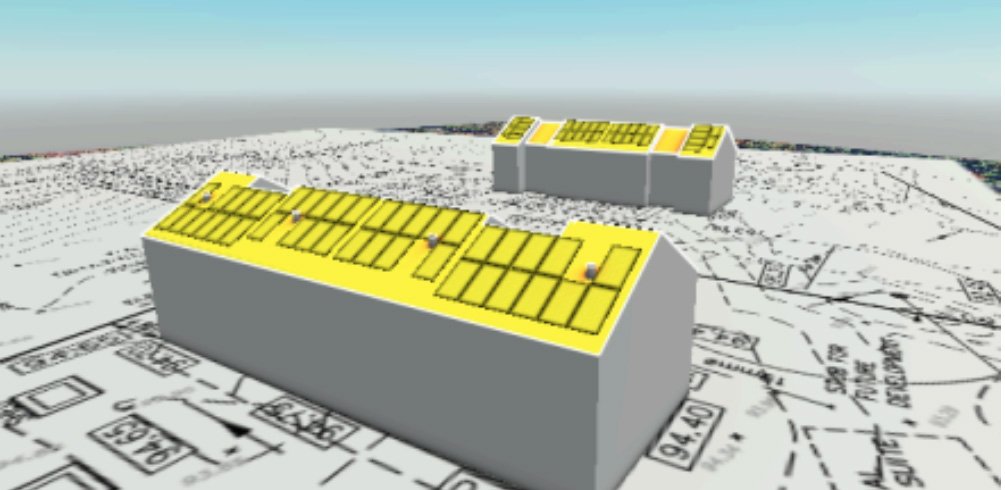
Schematic showing the proposed placement of solar panels on the units at Loon Lake.
“CMHC funding enabled the homes to be built,” Geh says, referring to the Canada Mortgage and Housing Corporation. “However, without HCi3’s funding, we would not be able to reduce energy costs for the tenants.”
The Akoma Lake Loon homes offer a practical example of what can happen when affordability is considered over the full life of a home. For the families who will live there, that can mean lower bills, comfortable homes, and more room in the household budget for everything else life brings.
And for other nonprofit housing developers in Nova Scotia, Akoma hopes the project can offer a model for building climate solutions and long-term affordability into new housing from the start.