Solar Pathways to Intergenerational Resilience — Strengthening Safety, Knowledge, and Community Preparedness
Grant Award: $10,000
In rural communities, a power outage can quickly become more than an inconvenience. Residents may lose access to heat, lighting, communications, charging for essential devices, and timely emergency information. In Guysborough County, where severe weather and prolonged outages have become a growing concern, community conversations highlighted the need for practical, locally driven tools that could strengthen emergency preparedness.
That need shaped Solar Pathways to Intergenerational Resilience, a project led by Randy Headley on behalf of the Delmore “Buddy” Daye Learning Institute (DBDLI), with support from project team member Jochebed Quansah. The project installed solar-powered lighting and charging infrastructure in rural and historically African Nova Scotian communities, providing resources that remain available when the electrical grid is disrupted.
For Randy, the project was about more than installing new technology. “The goal of Solar Pathways to Intergenerational Resilience is to enhance the ability of rural and historically African Nova Scotian communities to prepare for and respond to emergencies, while building stronger intergenerational ties,” he says.
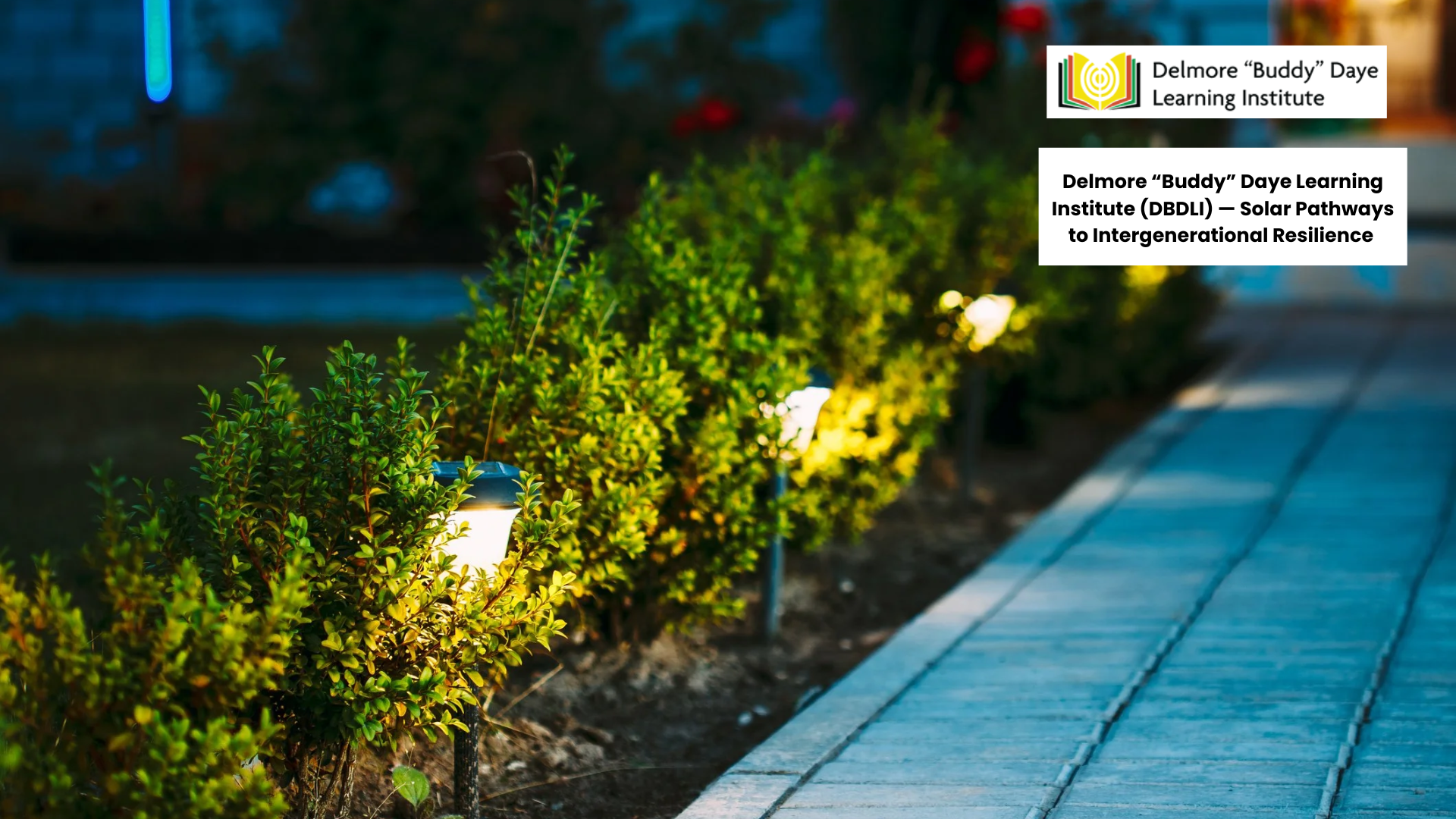
The solar lighting improves visibility and safety in shared outdoor spaces, while the charging station allows residents to power phones and other essential devices. During an outage, this can help people receive emergency updates and stay in contact with family members and local supports. During regular community activities, the infrastructure also makes outdoor spaces more functional and demonstrates how renewable energy can meet everyday needs.
A central part of the project was bringing youth and Elders into the work together. Elders contributed lived experience, historical knowledge, and perspectives on how their communities have responded to past challenges. Youth brought new ideas, energy, and an opportunity to carry that knowledge forward.
This intergenerational approach helped ensure that the project was not only about physical infrastructure. It also created space for learning, participation, and local leadership, grounding resilience planning in the experiences of the people who live in the community.
Delivering the project in rural locations required flexibility. The team encountered challenges related to limited infrastructure, weather, site accessibility, material sourcing, technical requirements, and coordinating community availability. They worked through these barriers by maintaining open communication, adjusting timelines, and relying on local partners and community knowledge to guide decisions.
Community members have responded positively to the practical benefits of the solar infrastructure and to the opportunity to learn more about renewable energy. For Jochebed, success will be reflected in how residents use that knowledge after the project is complete.
“Success for this project is when community members are well educated about solar energy and understand its environmental, social, and economic benefits,” she says. She hopes the project will encourage residents to begin incorporating accessible solar-powered solutions into their own lives, even through small steps such as using solar lawn lights.
Jochebed also sees the charging station as more than an emergency resource. It can support outdoor events, provide a place for people to exchange information, and serve as a visible example of renewable energy in practice. By showing that solar power can reliably support ordinary community needs, the project may also encourage neighbouring communities to explore similar solutions.
For DBDLI, the project’s long-term value lies in stronger local emergency capacity, increased renewable energy awareness, and deeper relationships with African Nova Scotian communities. By combining practical solar infrastructure with intergenerational learning and community leadership, Solar Pathways to Intergenerational Resilience is helping create a foundation for safer, more prepared, and more sustainable communities.