
Finding Climate Solutions in Halifax’s Coastal Wetlands
Grant Award: $60,000
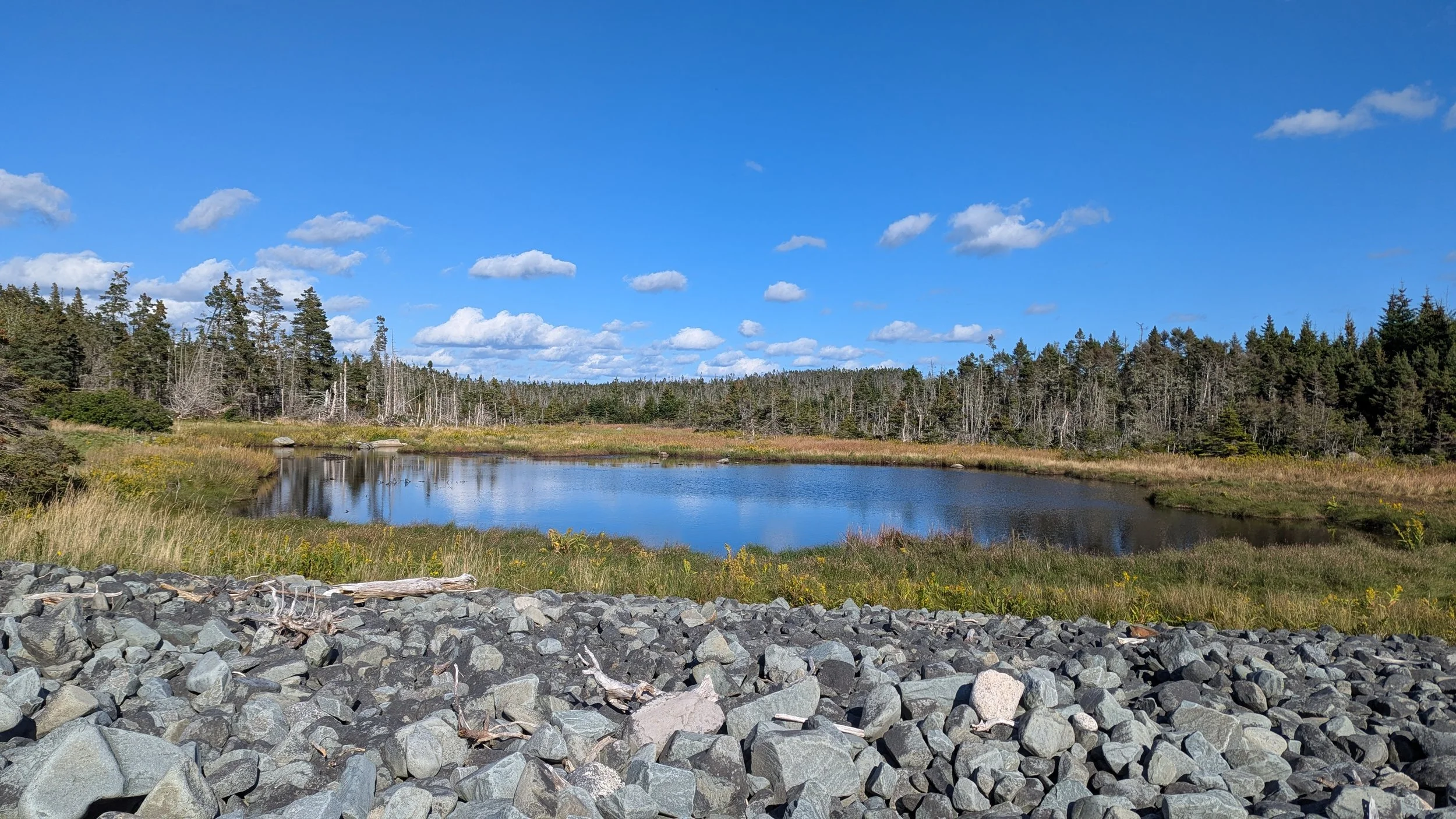
This is the lagoon that is surrounded by coastal wetland plants. Blue Maritimes Society collected samples at the pond edges where they encountered differences in vegetation types.
Sometimes the most important climate solutions are not new technologies.
Sometimes they are places that have been quietly doing their job for centuries.
Along Nova Scotia’s coastline, salt marshes and other coastal wetlands capture and store carbon while helping protect communities from flooding, storm surges, and other impacts of climate change. Yet much of their value remains hidden beneath the surface.
That’s what Blue Maritimes Society hopes to better understand through its HRM Blue Carbon Pilot and Climate-Ready Pathway project. With support from HCi3 and in collaboration with the Community Eelgrass Restoration Initiative (CERI) and Nova Scotia Nature Trust, the organization will spend the next 18 months studying three coastal wetland sites in Halifax/Kjipuktuk and developing practical tools to support future conservation, restoration and climate planning.
“Blue carbon is the organic carbon that is stored and captured by the ocean and coastal ecosystems,” says Cecilia Cordero Oviedo, founder, chair, and executive director of Blue Maritimes Society. “In many ways, blue carbon is a nature-based solution to climate change itself.”
The project begins with a simple idea: before communities can protect what matters, they need to understand what is already there. For researchers, that means first creating a clear picture of current conditions.
“Baselines give us a starting point,” she says. “We need to understand what we have today before we can measure what is changing, what the priorities are, and make informed decisions.”
While coastal wetlands are often recognized for their ecological value, their role in climate action is less widely understood. Over time, wetlands such as salt marshes and eelgrass meadows capture and store carbon in their soils. When those ecosystems remain healthy and intact, much of that carbon stays locked away rather than entering the atmosphere.
For Cordero Oviedo, that makes these landscapes one of the most accessible climate solutions available.
“This is a natural process,” she says. “We don’t have to do anything but keep the ecosystems intact.”
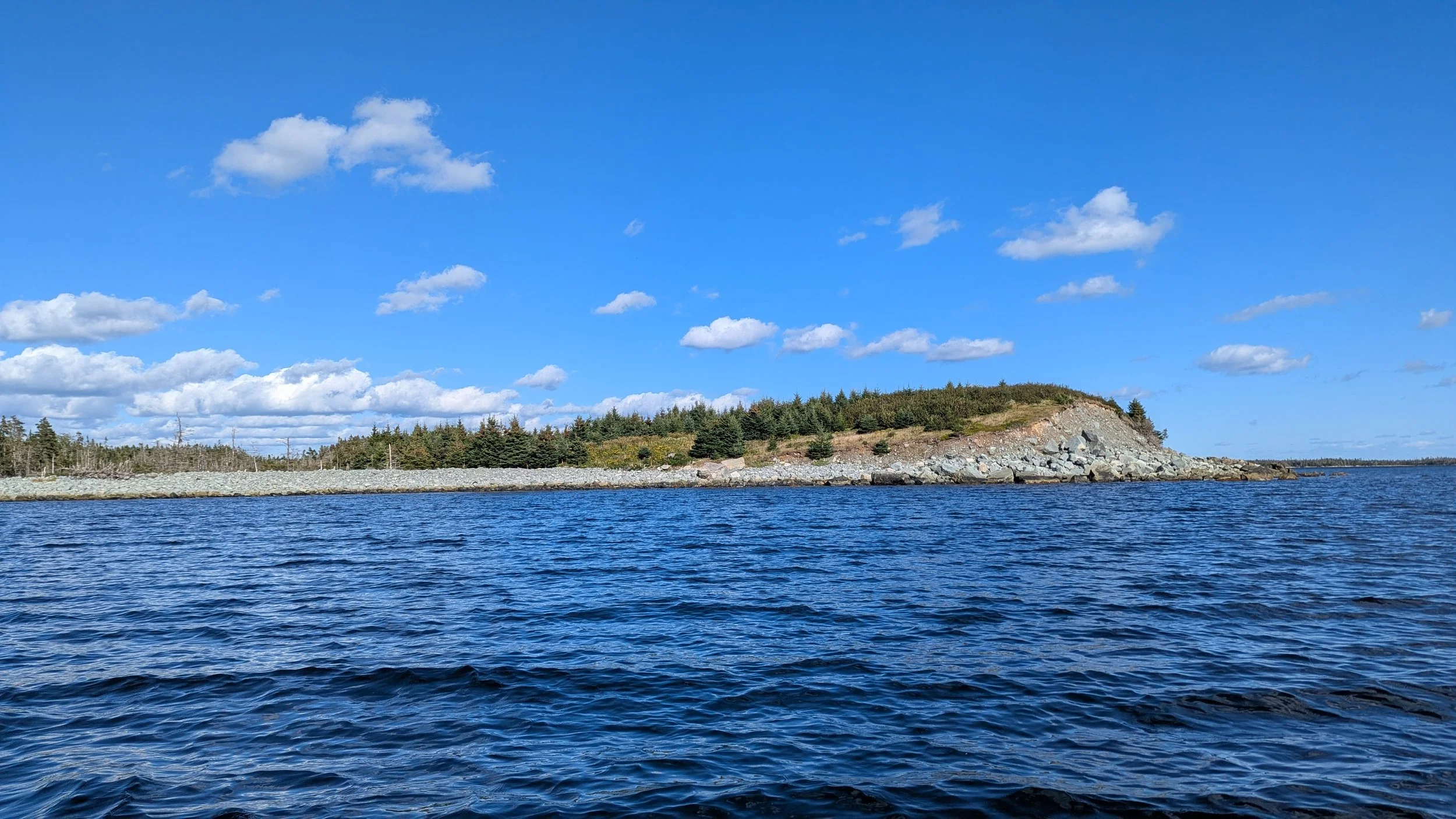
Reaching the coastal wetland site by boat offered the easiest access, with the rugged rocky shoreline visible along the coast.
The project will focus on three wetlands that represent different environmental conditions and pressures.
Some are relatively undisturbed, helping researchers understand what healthy systems look like. Others have experienced past disturbances or face development pressures. By comparing different sites, the team hopes to build a clearer picture of how wetlands store carbon and where conservation or restoration efforts could have the greatest impact.
“We really want to understand what is happening beneath the surface,” Cordero Oviedo says. “You can walk through them and see the vegetation, but you cannot see what’s happening in the soil.”
That work involves collecting soil samples, conducting laboratory analysis, and translating scientific findings into information that policymakers, conservation organizations, and community members can actually use.
The goal is not simply to produce research.
“This is not just about creating data,” Cordero Oviedo says. “We want to use the information to empower communities as well.”
The project arrives at a time when municipalities and governments are looking for practical ways to reduce emissions, strengthen climate resilience, and adapt to more frequent extreme weather events.
In Nova Scotia, coastal wetlands already provide benefits that extend well beyond carbon storage. They help buffer shorelines from storm surges, reduce flood impacts, provide habitat for wildlife, and support biodiversity along the province’s extensive coastline.
“Nova Scotia has an enormous coastline, and these coastal wetlands are a very important part of this landscape,” Cordero Oviedo says. “They act as natural coastal barriers but also help protect communities and ecosystems from some of the impacts of climate change.”
What makes the project especially valuable is its focus on creating tools that can support future decision-making.
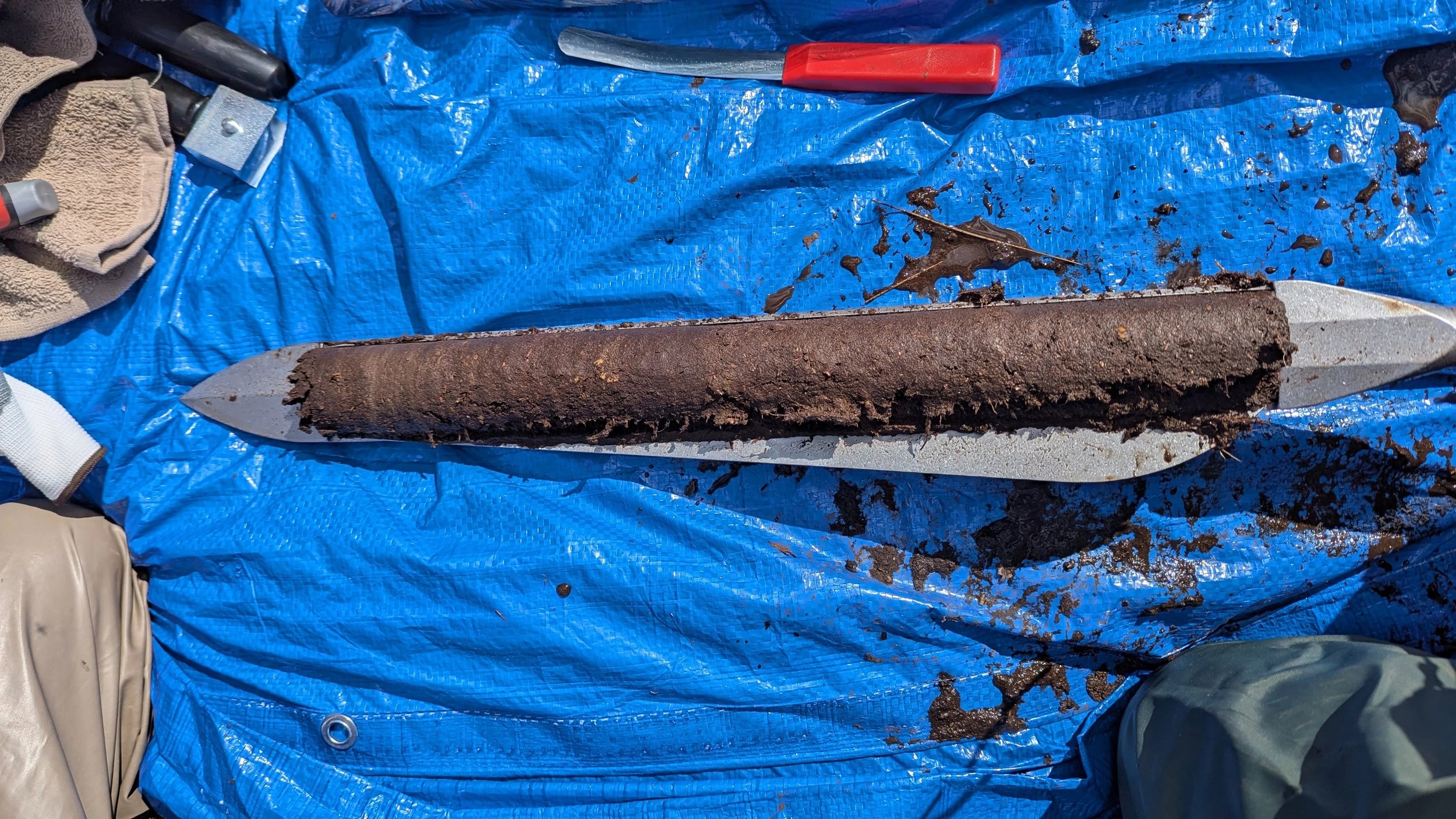
One of the sediment cores collected during fieldwork, providing valuable insights into the history and health of the coastal wetland.
Rather than carrying out large-scale restoration during the grant period, the project is designed to provide the evidence and planning foundation needed to identify where future action may be most beneficial. The team will develop maps and frameworks that can help municipalities and partner organizations better understand which wetlands hold significant carbon value and where protection or restoration efforts could yield the greatest long-term benefits.
For Cordero Oviedo, data can fundamentally change conversations about conservation.
“It’s very different when you say this is an important wetland versus saying this wetland stores carbon and that carbon is at risk if we develop or change it,” she says. “The way that you put the data into a conversation changes the whole context.”
HCi3’s funding will also help strengthen connections between Blue Maritimes Society's work and ongoing research being conducted by CERI. Together, the organizations hope to build a more complete understanding of blue carbon systems by connecting research on eelgrass meadows with nearby coastal wetlands.
The partnership reflects a broader belief that climate solutions require collaboration across sectors and disciplines.
“We believe that reaching those goals cannot happen through one approach or by one organization,” Cordero Oviedo says. “This is teamwork.”
That collaborative approach extends beyond researchers and policymakers. A key part of the project involves producing accessible, public-facing materials that help residents better understand the value of coastal ecosystems and the role they play in protecting communities.
Cordero Oviedo hopes the project will encourage people to look at familiar landscapes in a new way.
“We want to invite people to look a little bit closer to the coast,” she says. “There’s a lot of story beneath the soils of these coastal ecosystems.”
A wetland may appear quiet and unremarkable to someone walking nearby. Yet underground, it can be storing carbon accumulated over decades or even centuries while helping protect nearby communities from flooding and storm impacts.
The challenge, Cordero Oviedo says, is making that value visible enough to inform future decisions.
“Establishing a local baseline helps us understand what is at stake before those decisions are made.”
For Blue Maritimes Society, the project also represents an important milestone in the organization’s evolution.
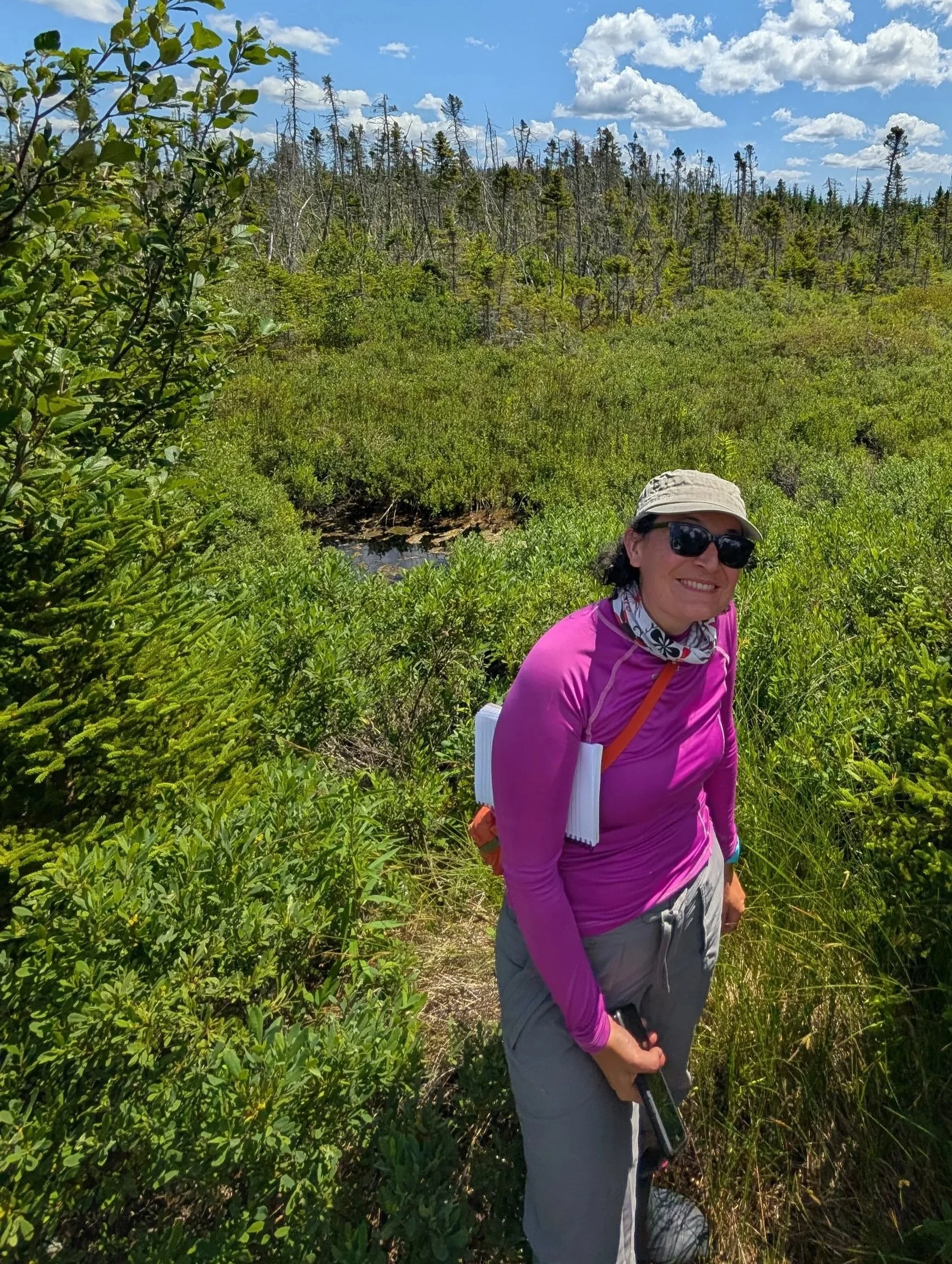
Exploring one of the study sites during a scouting trip, Blue Maritimes Society founder, chair, and executive director Cecilia Cordero Oviedo helped assess accessibility and logistics ahead of fieldwork.
Founded by scientists and environmental advocates passionate about blue carbon and coastal ecosystems, the organization was created to help generate the evidence and tools needed for informed climate action in Nova Scotia.
“Blue Maritimes was born as a little idea,” Cordero Oviedo says. “We found ourselves very motivated about what we can do with our knowledge, but also with our passion for blue carbon and how we can give back to Nova Scotia.”
Over the next 18 months, the project's findings will help build a clearer picture of the climate value already present in Halifax's coastal wetlands.
The wetlands themselves will not be changed by the study. But the way people understand them might be.
And for ecosystems that have quietly been storing carbon, supporting wildlife, and buffering coastlines for generations, that understanding could be the first step toward ensuring they continue doing so for years to come.